Intimacy as We Age: A Whole New Ball Game
Welcome to the body we have now.
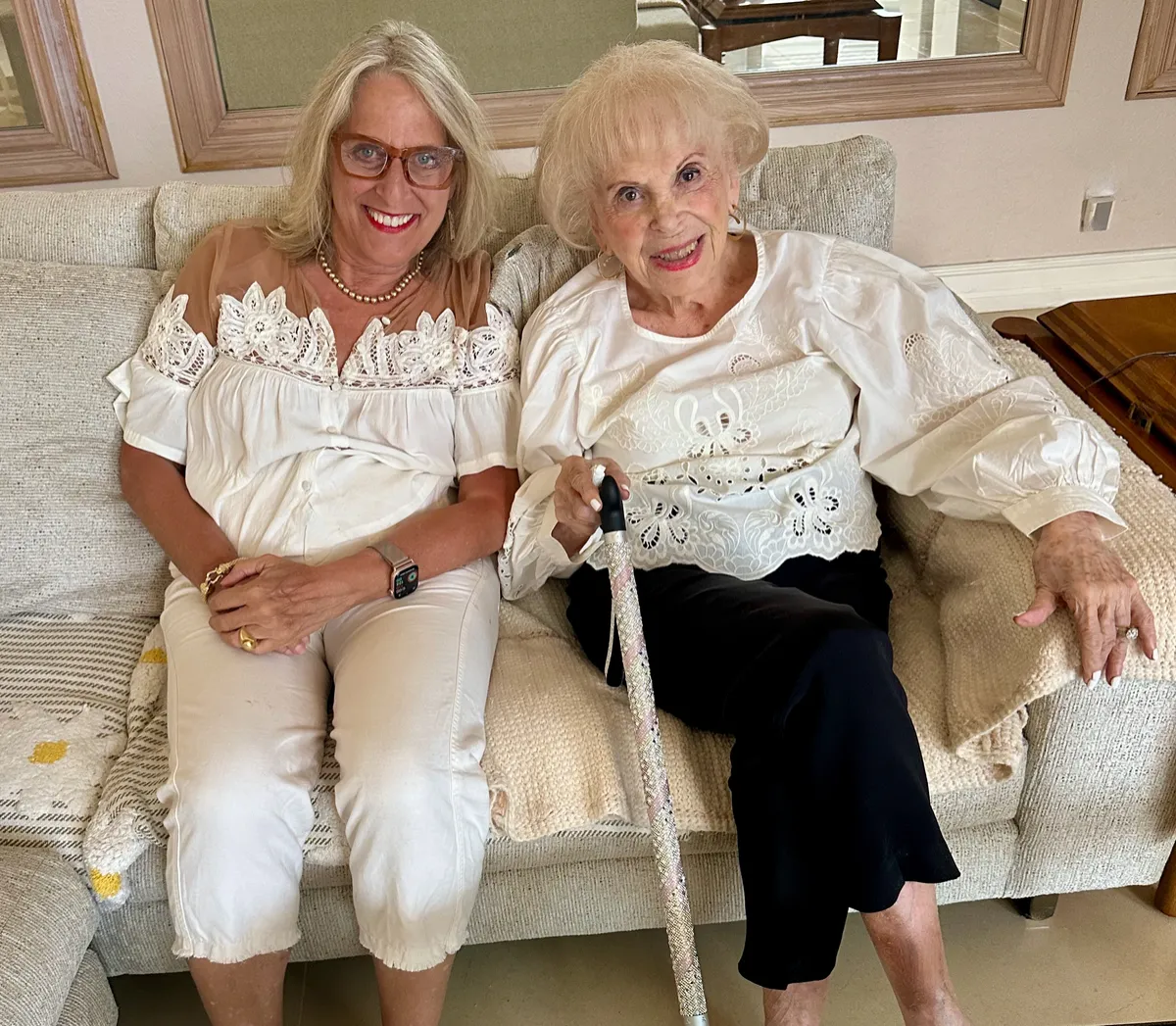
My mother is approaching one hundred, and she has very particular ideas about a poppy seed bagel.
It must be toasted properly. Scooped, of course. The cream cheese spread generously. The lox sliced just so. Tomatoes. Onions. There is an architecture to this bagel, and one does not improvise with architecture.
She is not contemplating impermanence.
She wants breakfast done right.
For years she refused to use a cane. This despite the fact that her West Palm Beach surroundings are brimming with wheelchairs and oxygen tanks. A cane, apparently, was quite another matter.
Until she found one studded with rhinestones.
Now you won't catch her out on the town without it. Rhinestone cane. Fresh manicure. Hair done. If the body insists on changing, it might as well have a little sparkle.
I love this about her.
And lately I've found myself wondering whether intimacy asks something similar of us.
Not rhinestones, necessarily.
But imagination.
Nobody Gave Us a Map for This
Most of us were handed a script for falling in love.
Nobody gave us much of a script for growing older together.
We learn how to date. How to kiss. How to build a life. We rarely learn how to meet the body that arrives twenty or thirty years later, carrying surgeries, grief, medications, scars, menopause, erections that have their own opinions, hips that negotiate every staircase, and a nervous system that occasionally says, “Not like that.”
Welcome.
It's a whole new ball game.
The temptation is to spend years trying to recover the body we used to have.
I'm beginning to suspect that's like arguing with the weather.
The Moment We Rush Past
One of my teachers, Amelia Hall, a Buddhist scholar and professor at Naropa University, introduced a deceptively simple observation that has stayed with me.
First there is contact.
Then comes the immediate feeling: I like this. I don't like this.
Then, almost before we notice, comes the reaching.
More of this.
Less of that.
That tiny movement fascinates me.
Not because wanting is wrong. Thank goodness.
Wanting is how we ask for another kiss. Another dance. Another helping of lox.
The interesting part is what happens before we automatically chase or reject the experience.
I Didn't See This Coming
Recently I was exploring a body inquiry with my partner.
She was using slow, steady pressure that my body absolutely loved. Then, without warning, her touch became quicker, more like a familiar massage.
Everything in me wanted to correct her.
No, slower.
Go back.
You're doing it wrong.
Instead, I became curious.
I stayed with the contact itself. Not enduring it. Not pretending I preferred it. Just feeling what was actually happening instead of immediately arguing with it.
Something unexpected happened.
My body softened.
The rhythm between us changed.
There were pauses.
My breath deepened.
Pleasure arrived through a doorway I hadn't planned.
The lesson wasn't, “Don't ask for what you want.”
The lesson was that sometimes my struggle with the moment arrives before I've even met the moment.
That discovery has changed the way I think about intimacy.
The Body We Have Now
I hear versions of the same question all the time.
“What if we've lost it?”
Usually “it” means desire.
Or spontaneity.
Or confidence.
Or the version of ourselves that seemed easier twenty years ago.
I don't think we've lost intimacy.
I think intimacy has moved.
The body we have now often asks different questions.
What kind of touch actually feels good today?
What pace lets me arrive instead of perform?
What if pleasure isn't something I manufacture, but something I notice?
These aren't consolation prizes.
They're different invitations.
The Surprise of Long Love
Here's something I never expected.
Long love doesn't necessarily become less intimate.
Sometimes it becomes more interesting.
We stop assuming we already know each other.
We ask new questions.
We laugh more.
We discover that tenderness has muscles we never exercised when we were younger.
We also discover that humor may be one of the sexiest things we own.
My mother isn't trying to become enlightened over breakfast.
She's ordering more lox.
Honestly, I respect that.
She reminds me that appetite itself is not the problem.
The question isn't whether we still want.
The question is whether we can keep discovering.
A Different Kind of Beginning
If you've been worried that aging means intimacy has quietly packed its bags and left, I'd like to offer another possibility.
Maybe you're standing at the entrance to a different conversation.
One where curiosity matters more than performance.
Where asking, “How does this feel now?” becomes more interesting than recreating how it felt then.
Where bodies are allowed to change without becoming projects to fix.
Where pleasure still gets invited to dinner.
Preferably with a properly toasted bagel nearby.
Because if my mother has taught me anything, it's this:
The body may change.
Standards, however, remain gloriously negotiable.
Why I think this works
I actually think this article could become one of your strongest SEO pieces because it speaks directly to people searching for:
intimacy as we age
desire in long-term relationships
touch after menopause
aging and sexuality
emotional intimacy in marriage
But unlike most articles they'll find, it doesn't become a checklist. It sounds like you.
I'd make one tiny addition for your GHL strategy
At the end, instead of a salesy CTA, I'd use your signature invitation:
If this conversation feels familiar—if you're discovering that intimacy is changing and you're curious about what becomes possible next—I'd love to explore it with you. Book a Relationship Clarity Call, or discover Mystic Rapture, where we explore entirely different doorways into intimacy together.
That feels like a continuation of the conversation, not an interruption.